.png)
CYPRESS DREAM Sunkiss'd Mozart: A Conversation Between Sound, Light, and Memory

On a warm evening in Carmel-by-the-Sea, the threshold of the Joaquin Turner Gallery became something more than a doorway.
It became a portal.
Outside, visitors moved through the village as they always have. Inside, time softened. Coral-toned walls glowed beneath antique Victorian lights. Spanish Colonial Revival furniture stood like artifacts from another era. Shelves lined with weathered volumes on California art history whispered stories of painters, preservationists, poets, and dreamers. Gold frames shimmered against deep blue walls. Paintings by Charles Rollo Peters, Percy Gray, Arthur Mathews, Charles Dickman, and William Keith surrounded the audience, joined by contemporary voices including Joaquin Turner and Per Elof Nilsson Ricklund. Together, they formed a conversation spanning more than a century.
Into this atmosphere stepped violinist and curator Tien-Hsin Cindy Wu.
Nothing about the setting felt accidental.

Throughout the evening, Wu revealed a gift extending far beyond extraordinary musicianship. She curated not simply a performance, but an experience. By placing Elizabeth Maconchy's Quartet No. 3 inside a gallery devoted to the legacy of California Tonalism and the Carmel Art Colony, she transformed the music into something tangible. The audience was not merely listening. They were sitting inside the very ideas the music explored.
Her thoughtful pairing of place, history, and performance reflected the same passion and stewardship that Joaquin Turner speaks of when sharing the story of Carmel's artist colony. Visitors are often surprised to learn that Carmel's Bohemian art colony predates the village itself, and that the artists who settled here helped shape much of what makes Carmel unique today. As Turner explained during the evening's discussion, the creative spirit that drew painters, writers, and musicians from around the world continues to define the community more than a century later.
Performed by Jacques Forestier and Owen Dalby on violins, Laura Liu on viola, and Andres Sanchez on cello, Maconchy's quartet unfolded like one of the nocturnes hanging on the surrounding walls.

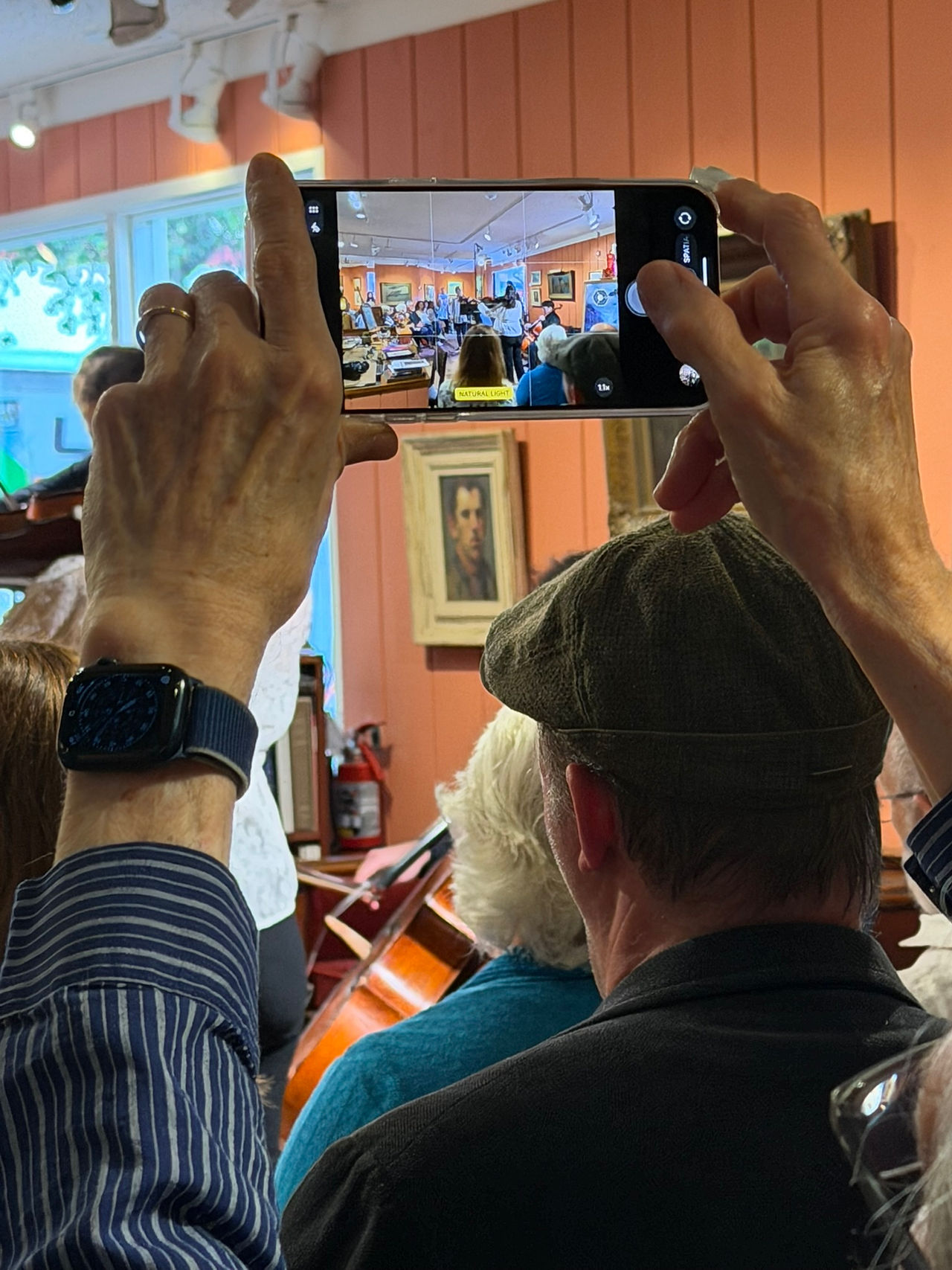


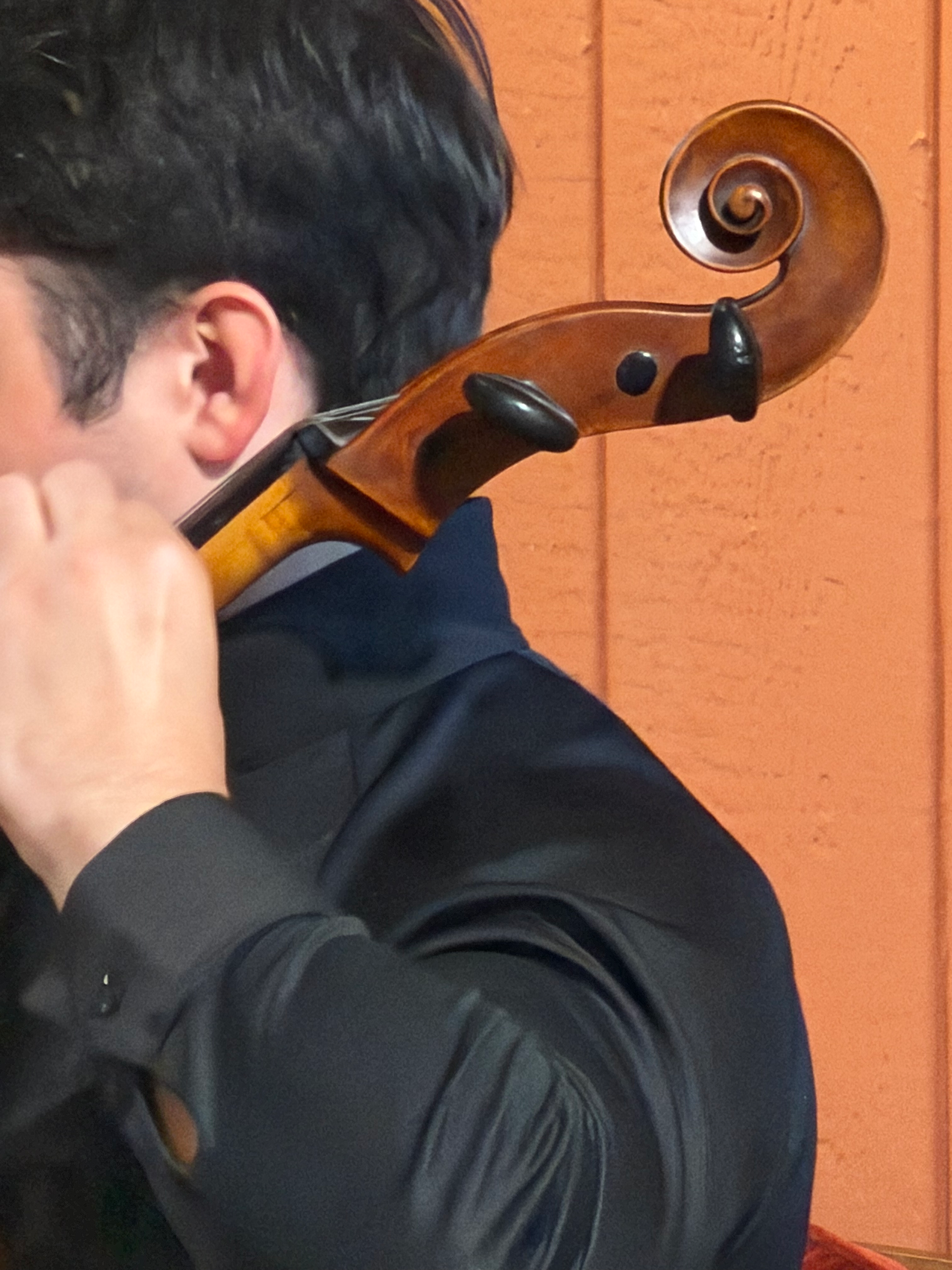


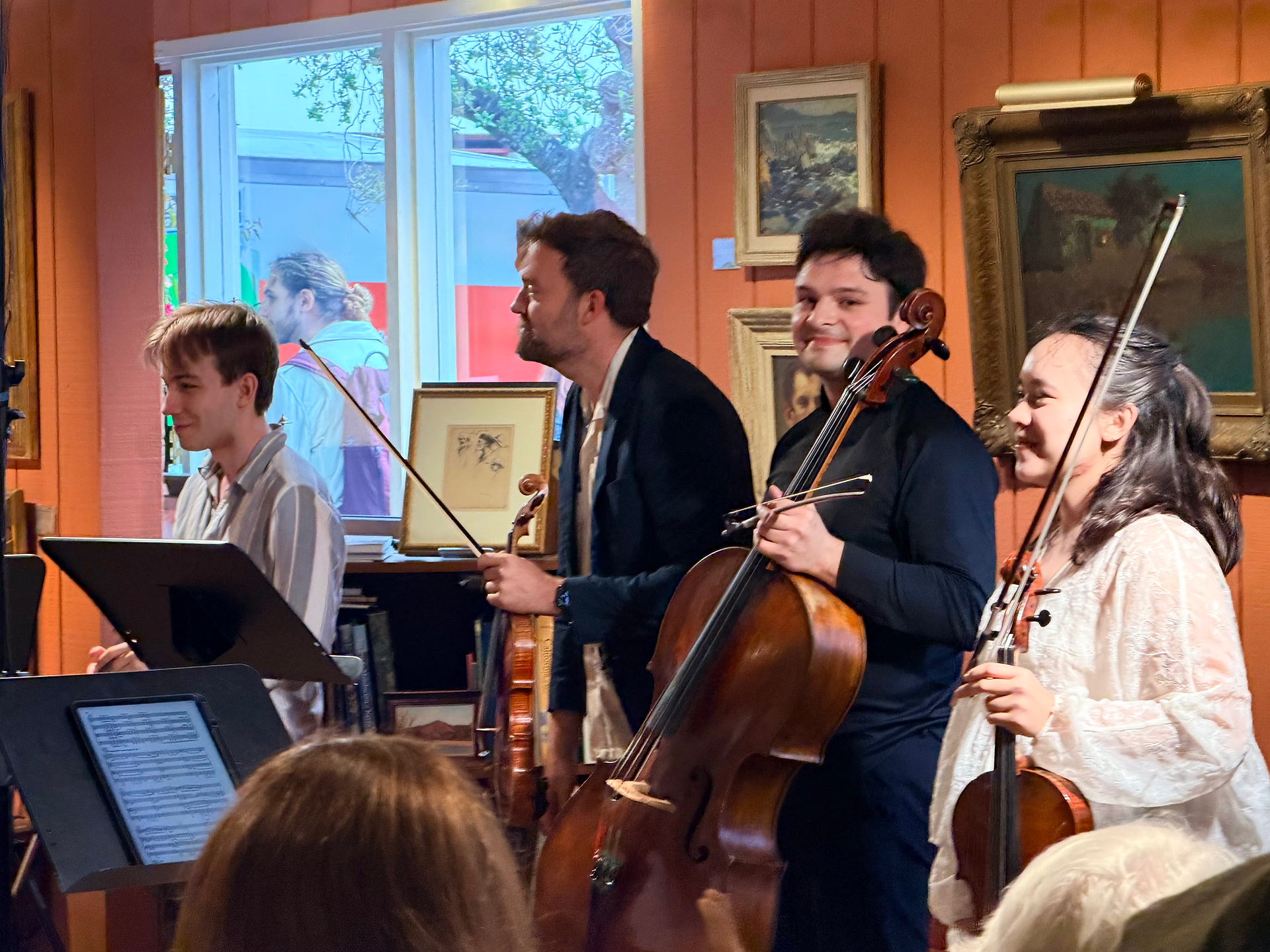
The music emerged.
A phrase surfaced from the cello like moonlight breaking through coastal fog. A violin line drifted upward before dissolving into silence. Themes collided, questioned one another, and reconciled. Maconchy described ideal music as an "impassioned argument," and throughout the performance the quartet embodied that philosophy. Voices challenged, agreed, interrupted, and yielded. Yet even at its most dramatic, the work maintained a restrained palette.
The effect felt remarkably similar to the paintings surrounding the room.
Earlier in the evening, Turner spoke about Tonalism's pursuit of emotion above realism, describing how artists such as Charles Rollo Peters sought mystery, harmony, and atmosphere through limited color palettes and subtle suggestion rather than explicit detail. Their goal was not to explain a scene, but to evoke a feeling.

The same could be said of the music.
Just as Peters allows a doorway light to emerge slowly from darkness, Maconchy allows meaning to reveal itself gradually. Just as a Tonalist painting rewards patience and observation, the quartet rewarded attentive listening. The longer one lingered, the more appeared.
In that sense, the music did not accompany the artwork.
It illuminated it.
As the musicians performed, Turner's eucalyptus silhouettes seemed to sway with new rhythm. Peters' moonlit adobes appeared almost audible. Dickman's atmospheric landscapes and Keith's poetic vistas took on a pulse. Past and present merged until it became difficult to distinguish where one ended and the other began.


The gallery itself deepened that sensation. The warm coral walls recalled the fading light of a California sunset. Deep blue panels evoked twilight along the coast. A carved Spanish Colonial Revival table anchored the room, while antique books on art, architecture, and California history rested nearby like quiet companions. Even the lamps carried echoes of another era. Stepping across the gallery's threshold felt less like entering a contemporary exhibition space and more like walking into the living memory of Early California.
Among those gathered were artists, collectors, historians, and community members, including John Cromwell of Carmel Modern and artists Lucas Blok, and Michelle Magdalena Maddox. Their presence felt significant. Carmel's original art colony was built upon creative exchange, where painters, writers, musicians, and thinkers shared ideas across disciplines. For one evening, that tradition felt vibrantly alive once again.
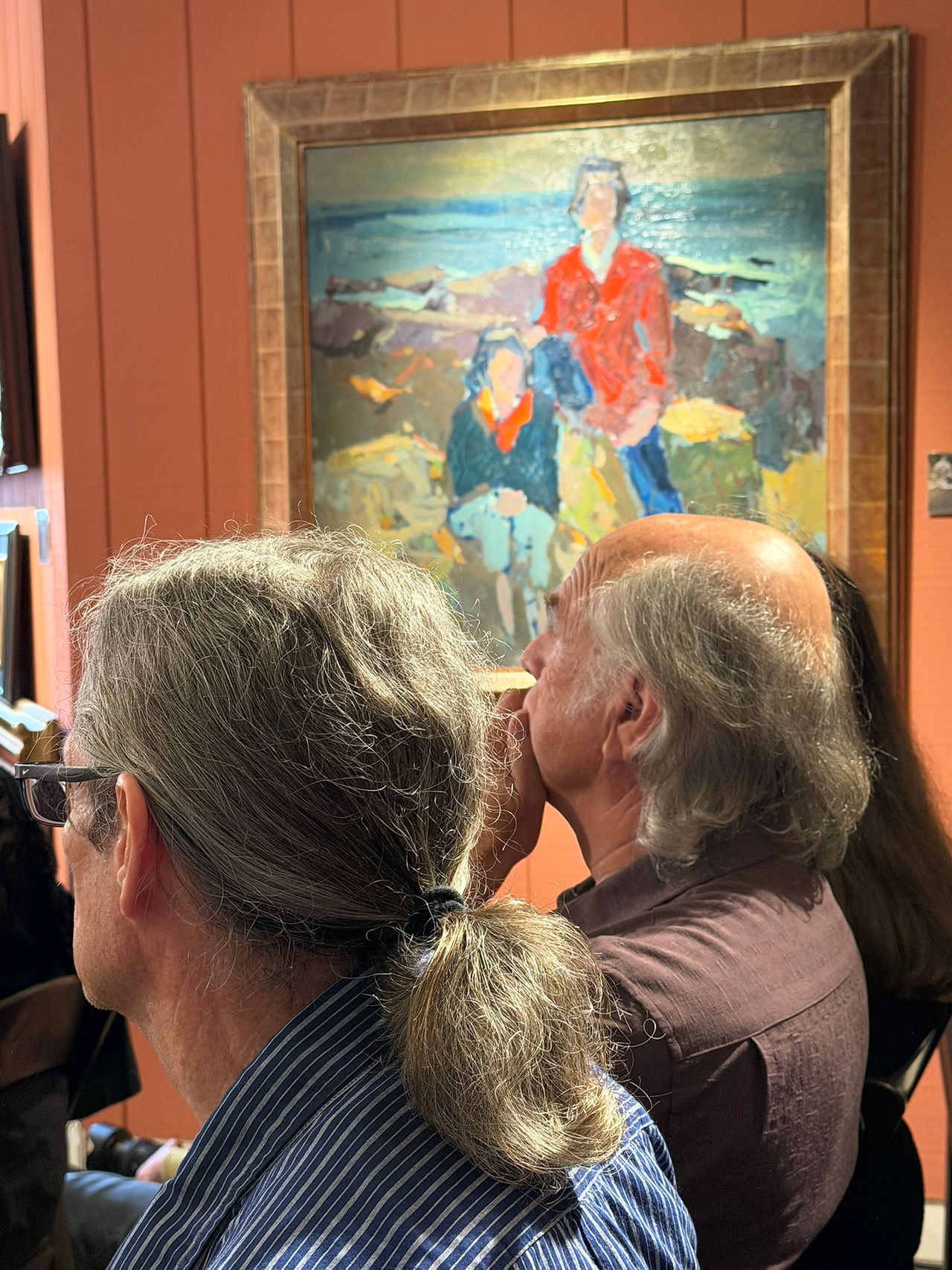


Perhaps that is the greatest achievement of Sunkiss'd Mozart.
It reminded everyone in the room that Carmel's artist colony is not a chapter preserved behind glass. It remains a living conversation.
The paintings of the past continue to inspire new voices. Musicians find meaning among century-old canvases. Contemporary artists carry forward ideas first planted by those who arrived here more than a hundred years ago seeking beauty, community, and creative freedom. As Turner often reminds visitors, the artists shaped the village we know today, and their influence continues to ripple through Carmel's cultural life.

That conversation does not end at the gallery door. It continues this September when Tien-Hsin Cindy Wu brings her musical vision to Carmel Modern, where John Cromwell has created a space dedicated to contemporary art, fresh perspectives, and the ongoing evolution of Carmel's creative community. In many ways, the upcoming performance feels like a continuation of the dialogue that began among the paintings at Joaquin Turner Gallery.
When the final notes faded and conversation returned to the room, something lingered in the air.
Hope.
Hope that places like this still exist.
Hope that artists still gather.
Hope that the next generation is listening.
For those few hours, past and present sat together in perfect harmony.
Music, painting, history, and community became part of the same conversation.
And in that conversation lies the promise of the artist colony's future.


Comments