
Built Around the Table
Updated: 3 hours ago
From generations tending Brosseau’s vines to the Sardine Factory’s enduring vision and Chef Benjamin Brandt’s craft, an evening built on care.

I could feel the cool air against my face as the temperature dropped with each step. The wooden staircase creaked beneath me; lanterns offered just enough light to follow its turns. Somewhere below, candlelight began to reveal the room.
First came the candelabras, then the extraordinary length of a redwood table. Glasses stood in glittering rows, their rims catching the flames. Brick alcoves receded into shadow. For a moment, I wondered how a table of that size had ever made its way underground.
The answer would come later. For now, I paused.
There was something of a Loire Valley cellar here, something of a catacomb, and a little of the theatrical imagination behind Pirates of the Caribbean. Beneath historic Monterey, an entire world had been assembled around the pleasure of gathering at a table.
On Saturday, October 17, that table brought us together for a Brosseau Wines dinner in the Sardine Factory’s Private Wine Cellar. Over the next several hours, winemaker Bill Brosseau and Executive Chef Benjamin Brandt would give the setting an equally memorable counterpart: a meal shaped by their affection for the land, their exacting work, and their delight in sharing it.
Even before the first course, the room had begun telling its stories.
Our host, Mark, explained that the cellar grew from the imagination of owners Ted Balestreri and Bert Cutino, with a Hollywood artist’s watercolor sketch helping establish its direction. The immense table came from a fallen Big Sur redwood. It had been installed before the ceiling was completed, resolving the question I had carried down the stairs.
Around it, materials connected Monterey’s working past with objects collected from farther afield. Reclaimed cannery bricks framed the alcoves; salvaged floorboards bore the patina of another century. Mark traced the chandelier and matching candelabras to a seventeenth-century Spanish abbey. There were Persian rugs, a hand-carved French side table, Victorian mirrors reflecting the candles, and a Louis XIV clock that, we were told, had long since stopped keeping time.
That last detail seemed particularly appropriate.
At our table sat technology founders and startup minds, business executives, and actors with stories reaching into Hollywood’s earlier chapters. Friends greeted friends; introductions quickly became conversations. The shared interest was immediate: an appreciation for people who make things well.


A Family Written into the Vineyard
Bill’s parents, Jon and Jan Brosseau, were with us that evening, along with his wife, Kilene. Their presence gave the wines a distinctly personal context. As Bill spoke, the vineyard became a place we could begin to picture through the family who had built it.
Jon and Jan’s dream began with an affection for the French way of life: vineyards, good wine, and the possibility of making those pleasures part of everyday living. They studied wine books and soil maps, searching for limestone within a manageable drive of their Los Altos home. Their explorations led them toward the Pinnacles and the mountainside wines of Richard Graff.
In what is now the Chalone appellation, they found a rugged property with limestone and decomposed granite beneath its brush. After a year clearing the land, Jon began planting in 1980. Bill was two.
Keeping those first vines alive required water hauled in by truck on weekends. The family moved between their weekday lives in Los Altos and the demands of a remote vineyard, returning every Friday to begin again. Bill told the story with humor, but the scale of his parents’ commitment was unmistakable.
Those weekends became his education long before he studied viticulture and enology at UC Davis. Today, he selects fruit for Brosseau Wines from favorite blocks among the rows he grew up tending. The vineyard has expanded to 42 acres, and its conversion to organic farming culminated in certification in 2011—the first vineyard in the Chalone appellation to achieve it.
Kilene brings her own training and experience to that work. Also a UC Davis viticulture and enology graduate, she worked harvests and developed her hospitality experience before moving into teaching. Now Director of Operations for Brosseau Wines, she balances the family business with her work at North Monterey County Unified School District.
Together, they carry forward a family enterprise whose history remains close to the surface of every bottle.
Bill described his wines as something like photographs in an album: records of a particular place, season, and moment. Over dinner, we would discover that some also preserve the personalities of his children.


Where the Dinner Began
My invitation came through my friend Chef Nance Danner. We had met through the creative gatherings that make Carmel-by-the-Sea feel so connected—from events at Mad Dogs & Englishmen Coffee to a Lucas Blok opening at Carmel Modern. Sharing this evening through her generosity felt like a natural extension of those encounters, where an appreciation for someone’s work becomes a friendship.
Nance’s friendship with Bill had also helped bring him into Chef Ben’s orbit. An anniversary dinner at the Sardine Factory deepened his enthusiasm; a bone marrow risotto, he recalled, stayed with him well after the meal. Seeing the cellar convinced him that he wanted to host an evening there.
During the evening, Sardine Factory co-owner and founding chef Bert Cutino joined us with a brief welcome. He spoke warmly about Ben’s efforts to make the dinner memorable and expressed his pride in the chef and the team supporting him. His offer was simple: if there was anything we needed, we should ask.
Then came a little humor. If we didn’t like the food, he suggested, we could always have McDonald’s delivered. He quickly assured us that would hardly be necessary. The laughter that followed suited the room: extraordinary surroundings made comfortable by the people welcoming us into them.
Preparing for our dinner had involved tasting through roughly twenty bottles together. Bill brought possibilities, and Ben began imagining dishes.
That exchange established the character of the dinner. Each had room to respond to the other’s work. A wine could suggest a texture, a sauce, or a direction; a dish could draw something unexpected from the glass.
Ben introduced the menu with the easy enthusiasm of someone eager to share a discovery. He spoke about growers, foragers, animal husbandry, and ingredients from his own garden. His culinary approach emerged through those details: technical precision supported by a close, practical relationship with his materials.
He could explain the provenance of a spoonful of caviar, then tell us about picking grape leaves that morning. His imagination moved comfortably between the elaborate and the familiar.
Soon, we began to taste what he meant.
A golden Dungeness crab croquette arrived perched on a small white ceramic hand, crowned with dark caviar. Its presentation invited a closer look: the crisp exterior, the delicate crab within, the concentrated salinity above. Bill’s Sauvignon Blanc from Arroyo Seco introduced the wine progression, its mineral character offering a bright opening to the evening.
Foie gras followed with beef-tallow-fried brioche, sweet potato crème brûlée, and a huckleberry-port reduction. Against the dark plate, an intricate savory tuile rose like a small piece of coral.
There was considerable richness here, carefully arranged: the smoothness of foie gras, the fried brioche, the sweet potato’s custard texture, and the darker fruit of wild huckleberries sourced from a Washington forager.
Alongside it, Chenin Blanc brought structure and polish. Bill explained that neutral French oak gave the wine its finished texture while preserving the grape’s character. With the dish, that balance became tangible. The wine carried the richness forward, making room for another taste.
His story about the variety brought laughter around the table. Chenin Blanc had helped inspire his parents’ early interest in wine, he said, although their recollection of that affection had shifted during its less fashionable years. Eventually, Bill persuaded his father to plant a few rows. Their success renewed the family enthusiasm.
Here it was, decades of that conversation poured beside our first course.
The wild mushroom and truffle experience brought us closer to the earth.
Beforehand, a large Italian truffle had passed from guest to guest. People lifted it to their noses, studying its surface and breathing in its aroma. It was an unusually direct introduction to an ingredient that would soon arrive transformed.
Chanterelle, lobster, and oyster mushrooms formed a deeply savory composition with truffle and a white-wine-and-soy reduction. Ben emphasized that the dish was entirely plant-based. Its depth came from the mushrooms themselves and the care with which they had been handled.
The accompanying 2018 Old Vines Chardonnay connected us to the vineyard’s earliest plantings. Bill described its own-rooted vines, planted in 1980, and the wine’s gradual development. At eight years old, its creamy texture met the mushrooms’ earthy intensity with remarkable composure.
The pairing asked us to slow down. There was more to notice with each spoonful and sip.


A Sense of Wonder
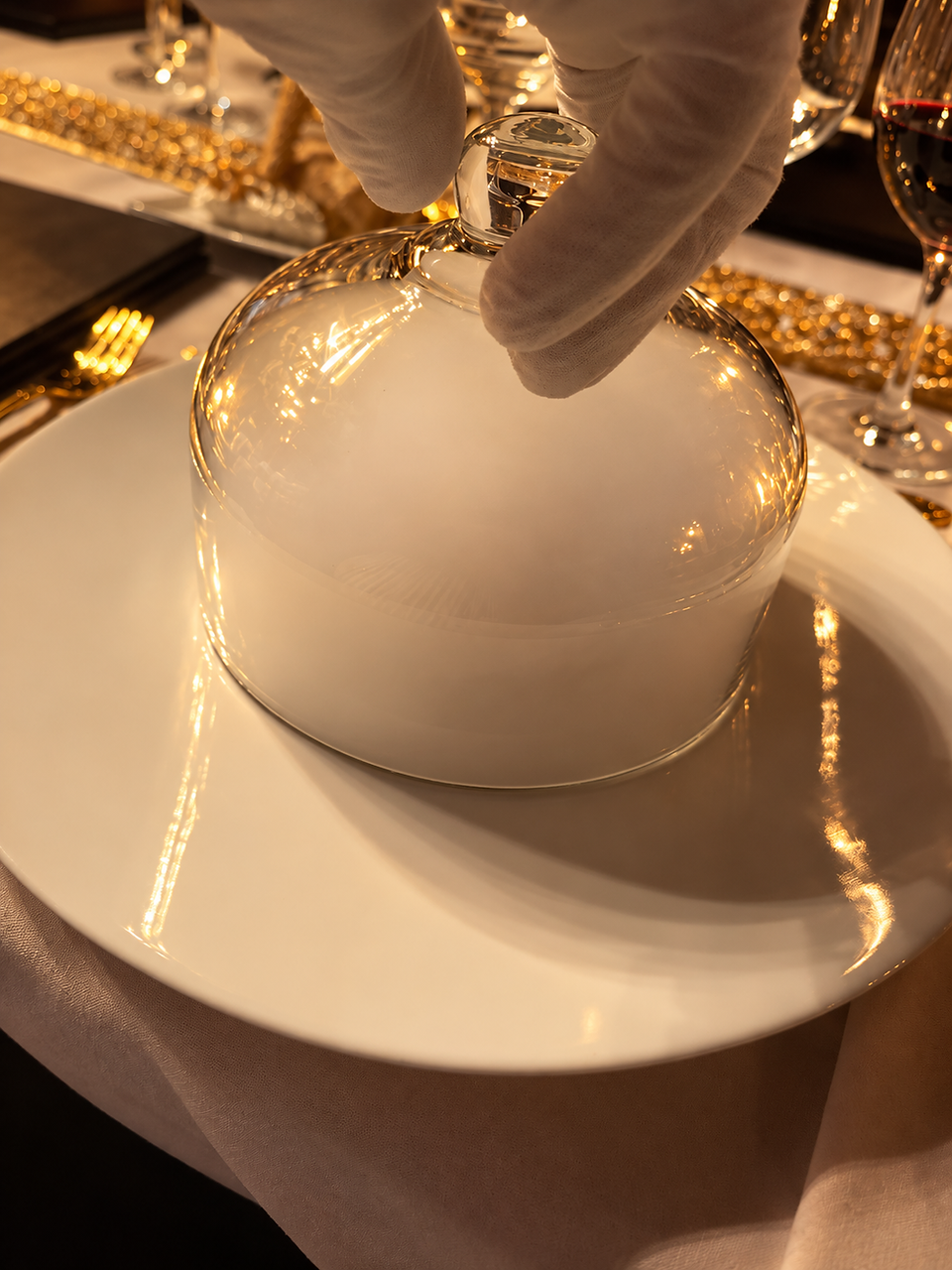
With the Japanese A5 Wagyu tartare, aroma became part of the presentation.
Rosemary smoke introduced a finely assembled dish of beef over crisp potato pavé, with truffle pearls, a softly poached quail egg, chives, mustard accents, and green chive oil. The potato supplied a clean textural contrast to the tender beef; the egg brought another layer of richness. Its small scale made the precision particularly apparent.
Then came miso-glazed wild abalone and sous-vide pork belly, presented in an iridescent shell.
Santa Barbara uni, Monterey ogo seaweed, smoked passion fruit, and sake foam brought the coast into the room. Lavender mist added a fleeting aromatic layer above the plate. The shell’s natural colors framed the food so beautifully that the vessel seemed part of the composition.
The dish moved between marine salinity, the depth of miso, the richness of pork, and passion fruit’s bright edge. The complexity held together because each element had a purpose.
Bill’s discussion of the Grenache added another dimension to the unfolding meal. He described hibiscus, rose petals, and red fruit, with the inviting aroma of Pinot Noir and some of Syrah’s textural presence. Hearing him explain the wine while it was in our glasses made the tasting feel conversational and immediate.
Even the pauses had been considered.
For the intermezzo, the lights dimmed and illuminated ice swans appeared along the table. Within them sat Autumn King grape and Riesling sorbet, finished with olive oil, blossom honey, and sea salt.
The cold sweetness of grape, the honey, and the small interruption of salt refreshed the palate. Around us, the room changed again: pale ice glowed against the brick and candlelight, and conversation gave way to a collective moment of surprise.


The Personal Details
The lamb course brought the evening into a deeper register.
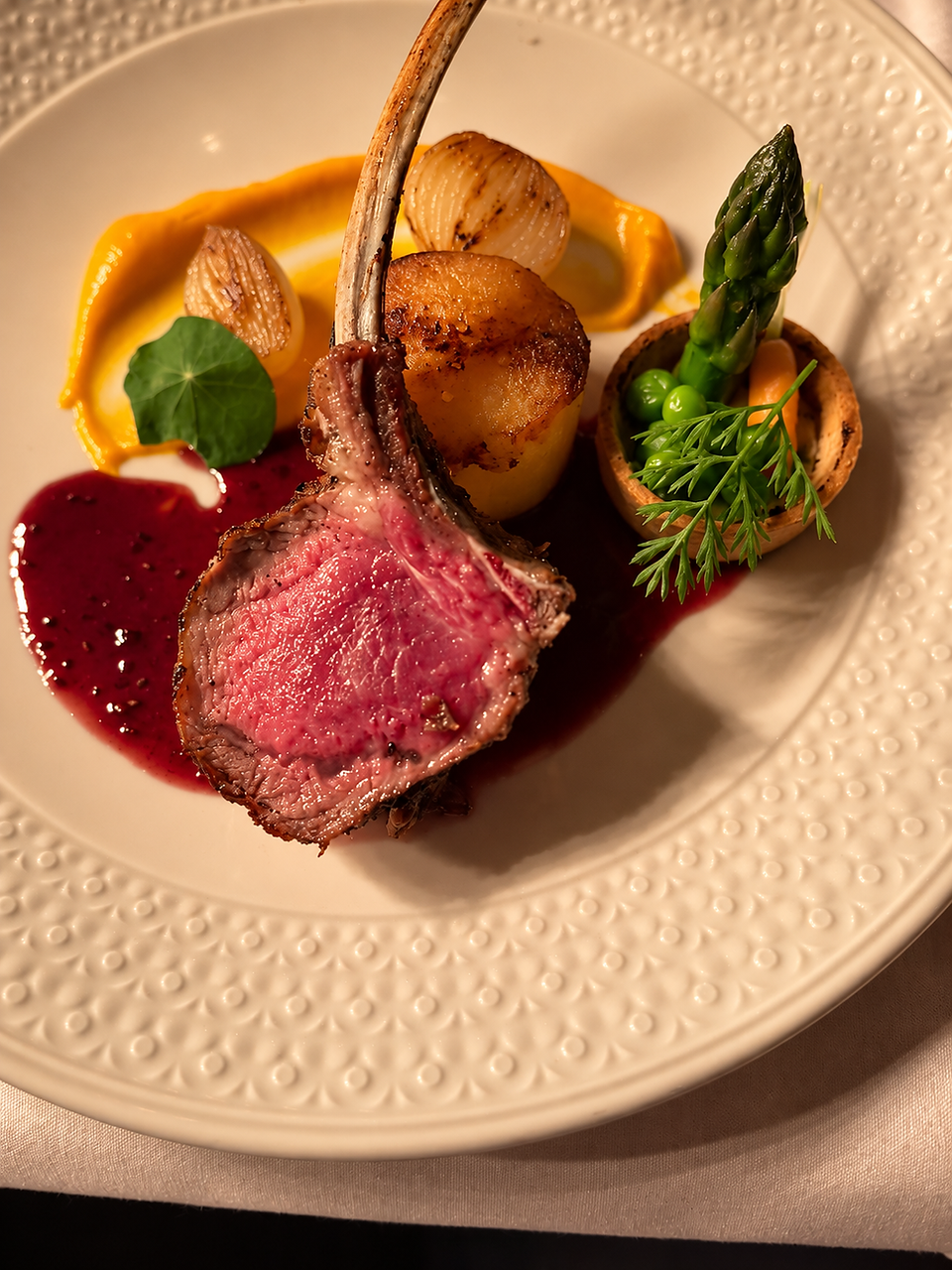
A Niman Ranch lamb chop rested over carrot purée, accompanied by a savory tart of morels, asparagus, English peas, and ricotta, with pearl onion, duck-fat fondant potato, and raspberry-port reduction.
Ben had chosen the lamb with attention to how the animals were raised. The carrots, he told Bill, came from his own garden.
That detail stayed with me. Amid the cellar’s antiques and the evening’s intricate preparations, a chef had brought something he had grown himself to our table.
The Red Blend Brody carried a similarly personal association. Combining Cabernet Sauvignon and Syrah, it was named for Bill and Kilene’s son. Bill recalled circling through decisions about whether to blend the varieties while Brody was going through a phase of spinning himself dizzy. The name preserved the coincidence.
The wine had also become a particular favorite of Ben’s during their preparations. With the lamb, the blend’s structure and depth found a generous setting in the meat, earthy vegetables, and fruit reduction.
Dessert made the friendship between chef and winemaker visible.
A chocolate sphere sat amid cocoa crumble, flowers, fruit, and gold leaf. Warm caramel poured over its surface, opening the shell to reveal candy cap mushroom mousse and the composition within.
Ben had conceived it as a tribute to Bill’s interest in digging through the soil. We were invited to excavate our own small landscape.
There were grape leaves picked that morning, bee pollen scattered through chocolate “dirt,” caramelized figs, and young pine cones from Del Monte Forest that had spent months with sugar. Ben called the latter nature’s gummy bears.
The final wine extended the family story. Bill’s late-harvest Syrah, named for their daughter, had involved the children foot-stomping grapes and an unusually domestic fermentation arrangement in the back of his pickup truck in Pebble Beach. By the time it reached our glasses, the wine held both the concentration of late-picked fruit and the memory of a family making something together.
Around the table, dessert prompted the same response as the swans: delight, questions, and a desire to look a little closer.


By then, the cellar felt familiar. The mirrors caught our movements; candles burned lower; glasses marked the progression of the evening. Friends leaned toward one another, and people who had arrived as strangers continued conversations begun several courses earlier.
I thought again about the redwood table, placed here before the ceiling was built. Everything around it had required someone to imagine an experience, then care enough to make it possible.
Jon and Jan had done that on a mountainside. Bill and Kilene continued it through their family’s wines. Ben expressed it through ingredients tended, gathered, tested, and prepared for the pleasure of the people in front of him.
For one evening, all of those efforts met at the same table.
We tasted the results. We heard the stories. And long after the final glass, I knew I would remember how it felt to be there.


Comments