.png)
A Sense of Place
The Places We Build Become the Lives We Live
The Community-Centered Design Philosophy of Natali Kampe

Some architects begin with a site plan.
Others begin with a sketch.
Natali Kampe begins with a conversation.
Long before a building takes shape, she seeks to understand the people who will inhabit it, the community it will serve, and the landscape it will ultimately become part of. It is a philosophy that quietly reveals itself throughout every chapter of her career, from the UNESCO World Heritage city of Kotor, Montenegro, to the evolving communities of California's Central Coast. Across continents, project types, and scales, one principle remains remarkably consistent: architecture succeeds when it enriches the lives of the people who experience it.
Raised in Kotor, Montenegro, Natali grew up surrounded by architecture that had already endured for centuries. Nestled along the Adriatic coast, the UNESCO World Heritage city offered an education long before she entered a university classroom. Historic stone streets, intimate public squares, and carefully preserved buildings were never simply monuments to the past. They formed the backdrop of everyday life, quietly shaping how people gathered, celebrated, and connected with one another. It wasn't until she began traveling that she fully appreciated the influence of the environment she called home. Watching visitors admire the buildings she had always taken for granted revealed architecture's remarkable ability to define identity, preserve culture, and leave lasting impressions across generations.
That realization inspired her to pursue architecture in Belgrade, Serbia, where she earned both her Bachelor's and Master's degrees in Architecture with a specialization in Architectural Technologies. There, she developed an uncommon balance between traditional architectural training and emerging digital technologies. Hand drafting, technical rigor, three-dimensional modeling, and computational design became complementary tools rather than competing disciplines. It was an education that prepared her not only to imagine architecture, but to understand how thoughtful ideas ultimately become enduring places.
Her professional foundation was established at Luštica Bay, one of Montenegro's most ambitious master-planned coastal developments. There, architecture extended well beyond the walls of individual buildings. Natali contributed to wayfinding systems, waterfront planning, public beaches, residential neighborhoods, parks, villas, consultant coordination, construction oversight, and material selection across an entirely new community. The experience fundamentally reshaped her understanding of architecture. Great places, she realized, are rarely remembered because of a single remarkable building. They are remembered because countless thoughtful decisions come together to create a place where people genuinely want to live.
Master planning taught her that every pathway influences movement. Every public space encourages interaction. Every material selection affects longevity. Architecture, at its highest level, becomes the invisible framework through which communities flourish.


When Natali relocated to the United States, she carried that philosophy with her.
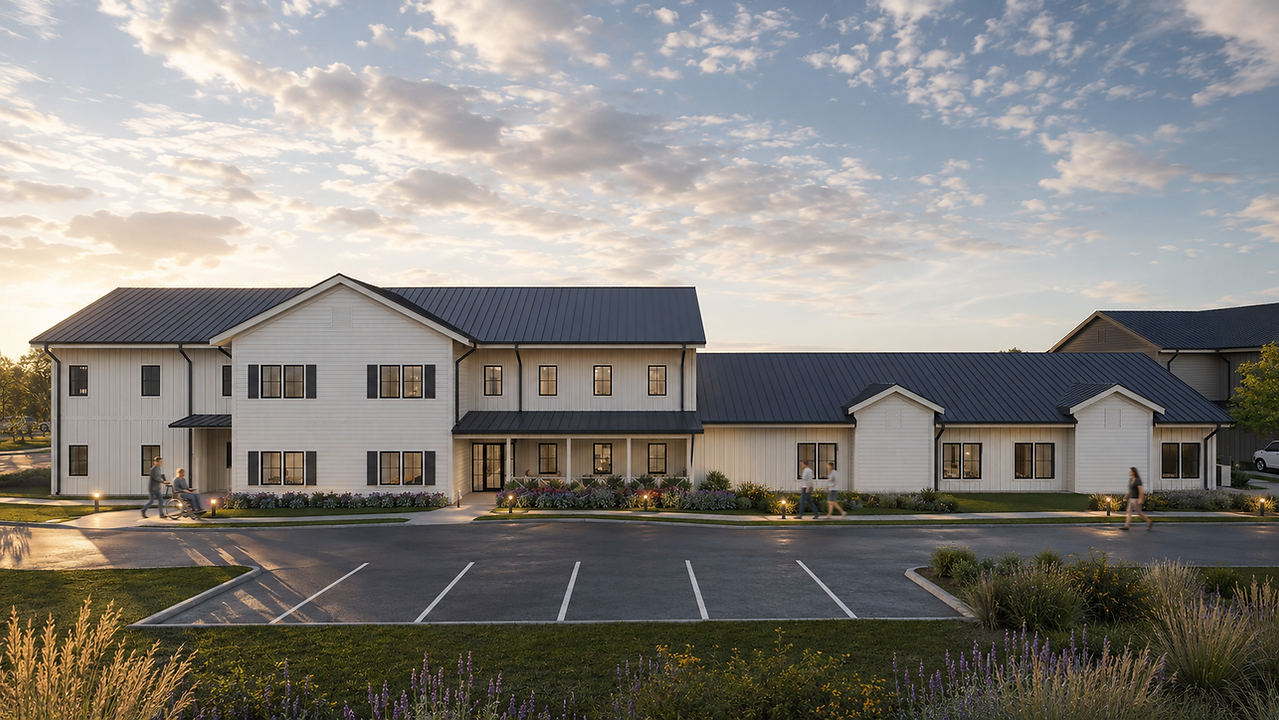
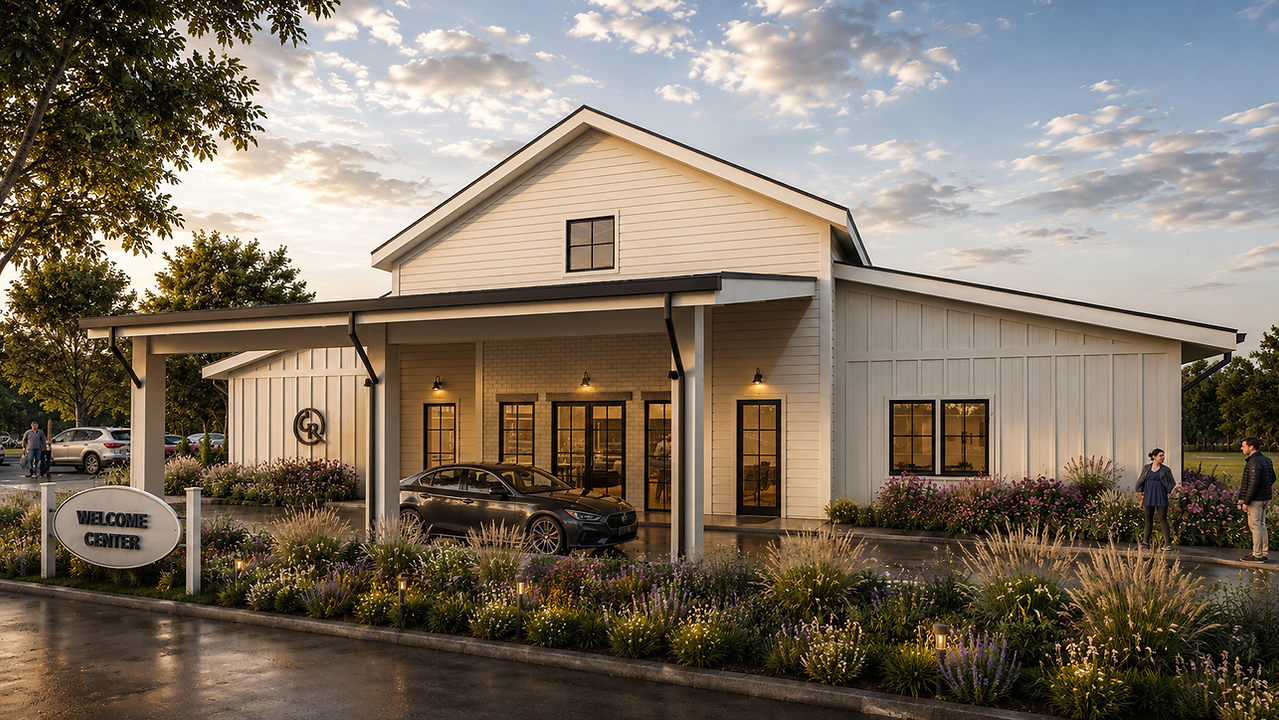
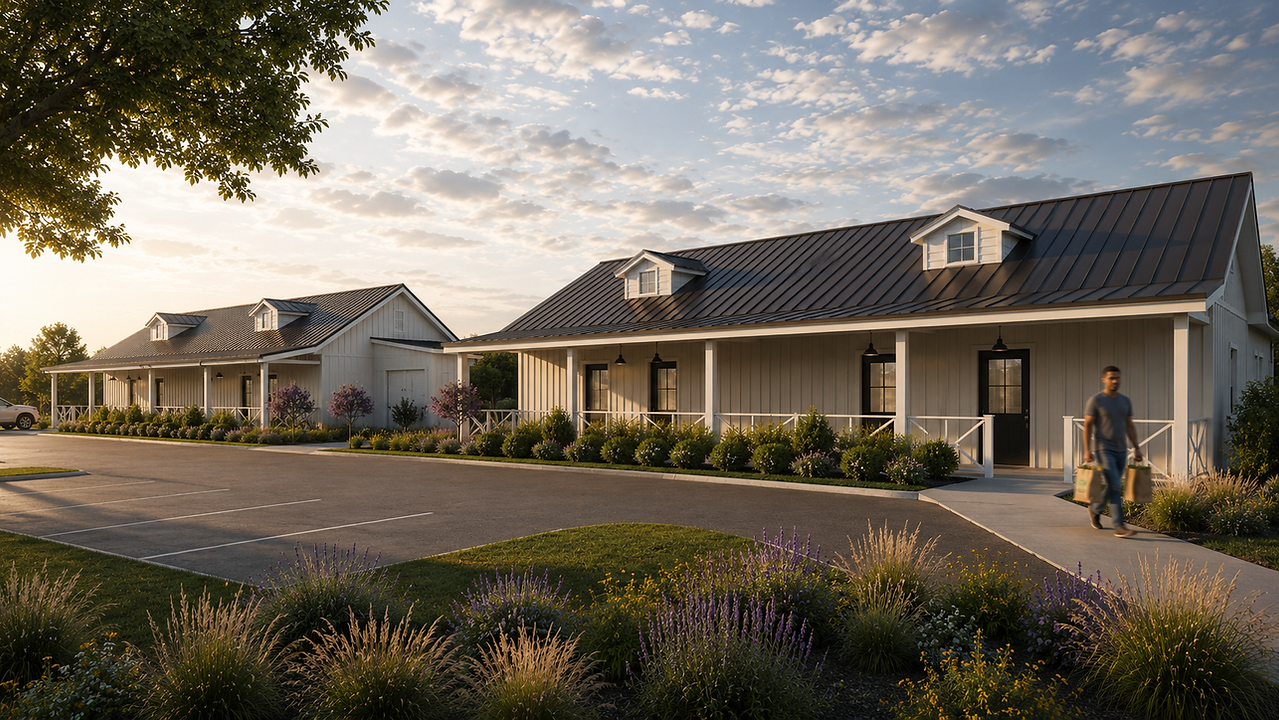
Joining Texas-based SSARCO of TX, she became part of the design team responsible for Cornerstone Ranch, an ambitious residential campus created to support adults with disabilities throughout every stage of life. The sixty-acre development integrates residences, chapel, dining hall, activity center, independent living apartments, outdoor gathering spaces, and housing for the caregivers who dedicate their lives to supporting the residents they serve.
Yet the project's greatest innovation was never its size.
It was its humanity.
Before design decisions were finalized, the team intentionally spent time meeting the caregivers and staff who would ultimately spend every day within the community. Rather than designing for them, the project was designed with them. Their daily routines, challenges, observations, and experiences informed the architecture itself, shaping everything from circulation and relationships between buildings to gathering spaces and the subtle moments that improve everyday life.
For Natali, this represented architecture at its highest purpose.
The caregivers were not simply employees working within the buildings. They became collaborators whose lived experience influenced the design. Staff housing was woven directly into the community, allowing caregivers and their families to become neighbors rather than visitors. Recreation spaces, courtyards, dining facilities, and communal gathering areas were carefully organized to encourage familiarity, dignity, independence, and belonging.
The result is architecture that quietly serves people rather than calling attention to itself.
In many ways, Cornerstone reflects the future of healthcare and community-centered design. It recognizes that buildings alone cannot create community. Community emerges when architecture is designed around the people whose lives unfold within it. Through empathy, listening, and collaboration, architecture becomes something more meaningful than construction. It becomes care made tangible.

That same philosophy ultimately led Natali to Fuse Architects, a Monterey Bay-based practice whose work immediately resonated with her. During our conversation, she described being drawn to projects that were contemporary while remaining deeply connected to their surroundings. Just as importantly, she admired the studio's collaborative culture, thoughtful mentorship, and commitment to understanding each client's aspirations before the design process begins. It was an environment where architecture was approached not simply as a service, but as a relationship.
Those values quickly found expression through Riverview, an ambitious residential reconstruction project in Capitola.
Situated beside Soquel Creek, the Riverview Project presented a challenge increasingly familiar to coastal California. Rather than demolishing the existing home, the project asked a different question: What is worth preserving?
The answer shaped every design decision.
Much of the original structure remains, carefully reinforced and adapted for the future. Existing foundations were stabilized using deep helical piers anchored into bedrock. Durable thermally modified bamboo cladding, Neolith façade panels, and comprehensive waterproofing strategies were introduced to protect the home against coastal conditions and rising flood risks. Every intervention sought to strengthen what already existed rather than replace it, extending the life of the architecture while respecting its relationship to the surrounding landscape.


Natali's role extended well beyond producing construction documents.
Recognizing opportunities for greater coordination, she refined and expanded the project's Building Information Model into a comprehensive digital resource used daily by architects, consultants, contractors, and clients alike. By improving interdisciplinary coordination early in the construction process, the model helped identify conflicts before they reached the field, streamline communication, reduce unnecessary costs, and preserve the integrity of the design throughout construction. Technology, in this instance, became another expression of thoughtful stewardship.
Yet Riverview is compelling for reasons that reach beyond technical execution.
It reflects an architectural philosophy increasingly relevant to our time.
In an era when demolition is often the easiest solution, Riverview demonstrates the value of thoughtful adaptation. Rather than erasing the past, the project carefully builds upon it. Existing character is preserved where possible, resilience is strengthened where necessary, and the home is prepared not only for today's occupants but for generations to come. Sustainability becomes less about novelty and more about responsibility.
Throughout our conversation, one observation surfaced repeatedly.
Natali rarely described architecture in terms of style.
Instead, she spoke about stewardship.
About collaboration.
About resilience.
About understanding the people who will inhabit a space long after the architects and builders have moved on.
Whether discussing the centuries-old streets of Kotor, the master-planned neighborhoods of Luštica Bay, the compassionate design of Cornerstone Ranch, or the resilient reconstruction of Riverview, her work consistently returns to one central idea: architecture is fundamentally about people.
That perspective feels increasingly important.
As communities confront changing climates, growing populations, evolving healthcare needs, and renewed interest in resilient placemaking, the profession requires architects capable of balancing technical excellence with genuine human understanding. Natali Kampe represents that emerging generation of designers. Her international experience offers a broad perspective, while her collaborative approach demonstrates that meaningful architecture is never created in isolation. It emerges through dialogue, shared purpose, and a commitment to those whose lives will ultimately unfold within the spaces being designed.
Perhaps that is why her work feels so quietly optimistic.
It does not pursue innovation for innovation's sake.
It values permanence over novelty.
It embraces technology without abandoning craftsmanship.
It recognizes that beautiful buildings matter, but enduring places are defined by the communities they nurture.
The future of architecture will undoubtedly introduce new technologies, new materials, and new ways of building. Natali Kampe appears ready for all of them. Yet if her work offers any indication of what lies ahead, the defining characteristic of her career will not be the buildings themselves.
It will be the communities they make possible.
Because before architecture becomes concrete, steel, timber, or glass, it begins with something far more enduring.
It begins with people.



Comments